
Dahlias – A History
J o A n n M i l l e r
Dalias were originally found wild in the mountainous regions of Central America and is Mexico’s national flower. The beautiful and brilliantly colored blooms we grow in our gardens today though, have come a long way from these wild species.
In 1570, the scientist Francisco Hernández was sent to Mexico by King Phillip II of Spain to research the region’s natural history. Dahlias were most likely among some of the 3000 plant descriptions he brought back when he returned to Spain. In 1786 a Spanish expedition returned to Mexico to complete Hernández’s work. In 1789, a botanist and priest named Antonio José Cavanilles, a senior member of staff at Madrid’s Royal Botanic Gardens, successfully grew plants using seeds brought back from this expedition to Mexico and published the first descriptions and drawings of three dahlia species. They were the Dahlia pinnata, D. coccinea and D. rosea.
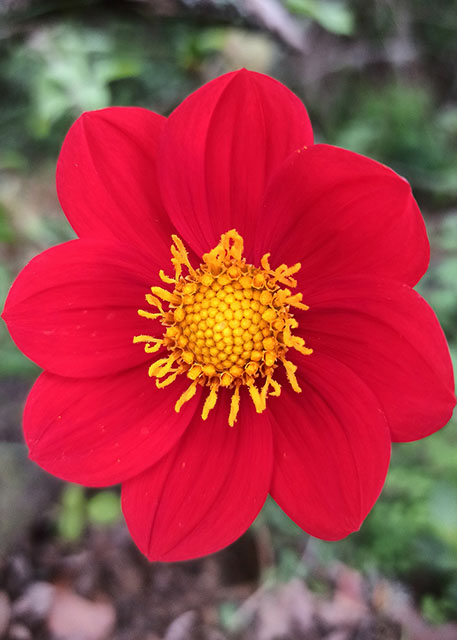
Dahlia coccinea

Antonio-Jose Cavanilles
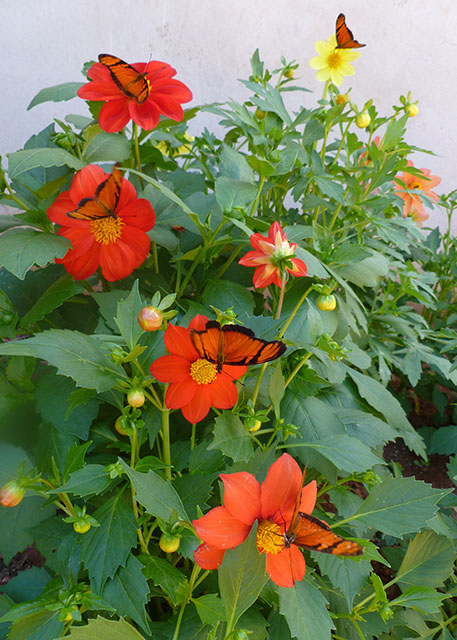
Dahlia pinnata
The first dahlias raised in Europe were single, open-centered flowers that horticulturalists soon discovered when grown from seed, naturally hybridized, readily changing their colors and shape. Double dahlias were first bred in Germany in 1808 and growers quickly began selecting for specific traits.
By 1820 around 100 dahlia varieties had been cultivated. In just 20 years that number had risen to 2,000. By the 1930s there were 14,000 named dahlia cultivars. There are currently over 57,000 officially registered dahlia cultivars, according to the Royal Horticultural Society, 42 recognized dahlia species and 15 classifications based on the formation of the flower head.
When dahlias began being trialed in the 19th century, the flowers were judged for their decorative qualities as specimens in the greenhouse or for floral arrangements. Reginald Cory, a wealthy coal merchant, horticulturist, and master gardener in his own right (1871–1934), was the owner of Dyffryn Gardens near Cardiff in Wales and changed all that.
He began the first trials of dahlias as garden plants in 1913, turning over most of his garden beds to dahlias. During his lifetime he bred thousands of cultivars which was an important contribution to Dahlias which was a popular ornamental plant at the time.

Reginald Cory
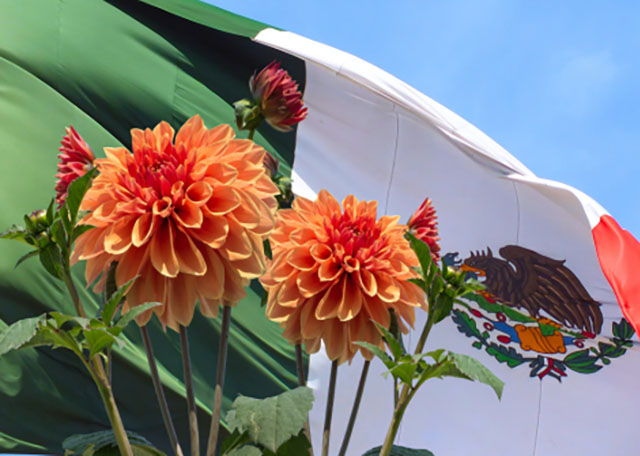
The Dahlia is the National Flower of Mexico.
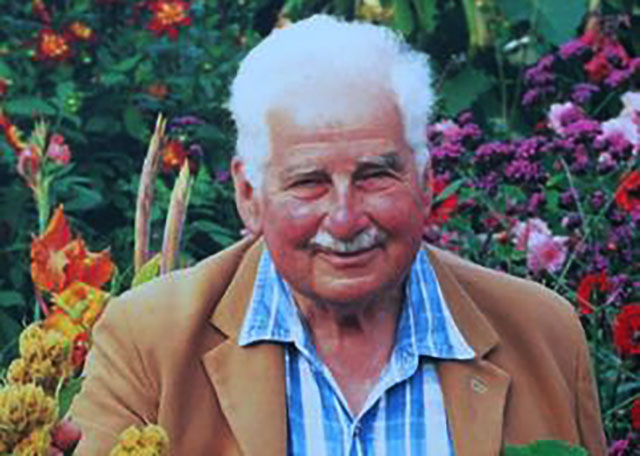
Christopher Lloyd
Creating a dahlia cultivar from seed generally takes several years, with a minimum of 3 years of evaluation. Dahlia hybridizers start with seeds, which produce unpredictable blooms compared to tubers. The first few years are spent observing the seedlings, noting their flower shape, color, and other traits. If the desired characteristics are consistent, the hybridizer will continue to grow the plants and potentially enter them in shows to receive feedback from other breeders. Once the cultivar is stable and the hybridizer is satisfied, they will begin producing more plants and potentially release the cultivar to the public.
When the Horticultural Society (later the Royal Horticultural Society) started regular flower shows in 1831, its September event was dedicated to dahlias. As they became the subject of serious competitions, the National Dahlia Society was set up in 1881. Reginald Cory was President of the National Dahlia Society from 1913 to 1934.
As tastes changed in the world of flowering plants and after more than 100 years of breeding, only around 20 percent of the thousands of varieties were still being cultivated by the early 1980s.
But, as fashion often does, the Dahlia fortunately has come full circle again. Christopher Lloyd's Exotic Garden at Great Dixter, created in the mid-1990s; the National Dahlia Collection and the restoration of many dahlia gardens and borders by the National Trust have contributed to the dahlias popularity once again.
You will find them in dedicated gardens, mixed borders, bedding and container planting in many of the gardens we care for today.
References: National Dahlia Society; National Trust, Google