Drip and Pulse Irrigation
David Wimsatt
My Journey to Subsurface
- I have been an avid Gardner all of my adult life
- During my 20’s I started doing landscape projects that involved in ground irrigation. (Pop-up systems)
- Moving to Albuquerque I started learning installation and methods of drip irrigation .
- This was using black line buried with 1/4” “emitter” lines to each plant
- After having numerous and varied 1/4” emitter failures, I started to learn about subsurface. I have been using subsurface for +/- 7 years.
What is subsurface irrigation
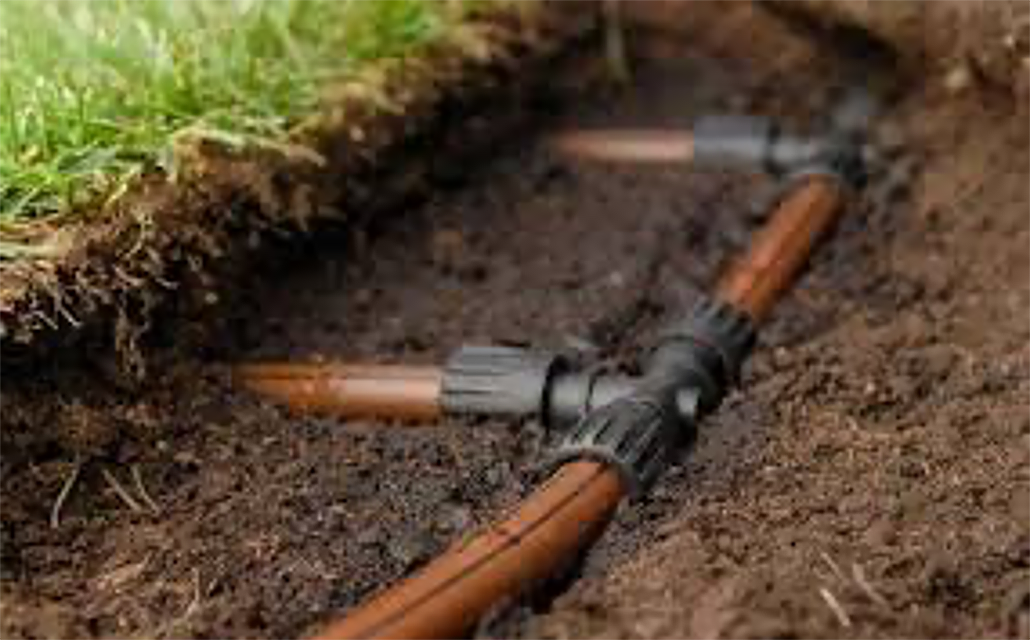
Subsurface drip irrigation is a modern and sustainable irrigation system that applies water directly to crops' root zones using buried drip lines.
In this irrigation method, the drip tubes are buried under the soil surface rather than on the ground. Wetting occurs around the drip tube, and water flows in all directions.
History and Development
- New Mexico State University (NMSU) has been involved in subsurface irrigation, also known as subsurface drip irrigation (SDI), through research, demonstration projects, and outreach, with documented activities in the early 2000
- Initial experiment indicated that water use could be reduced by half and, more importantly, increase yields.
- The concept of drip or “trickle” irrigation was conceived in Israel by Simcha Blass after the end of World War II and later developed during the advent of extruded plastics during the 1950s.
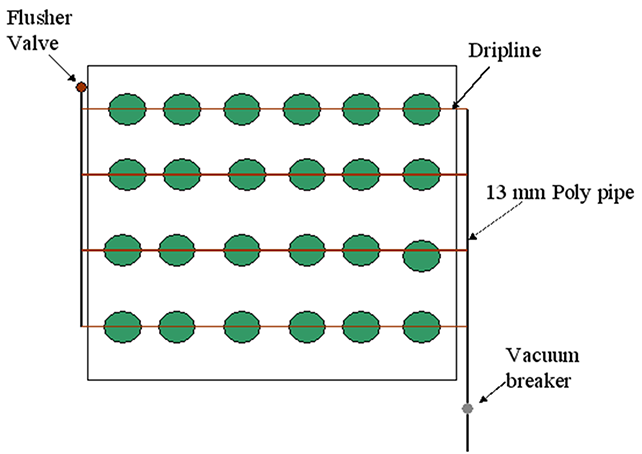
Components in residential an SDI system: SDI is composed of several key components:
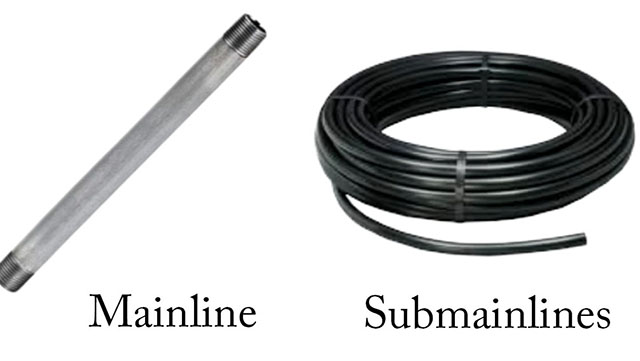
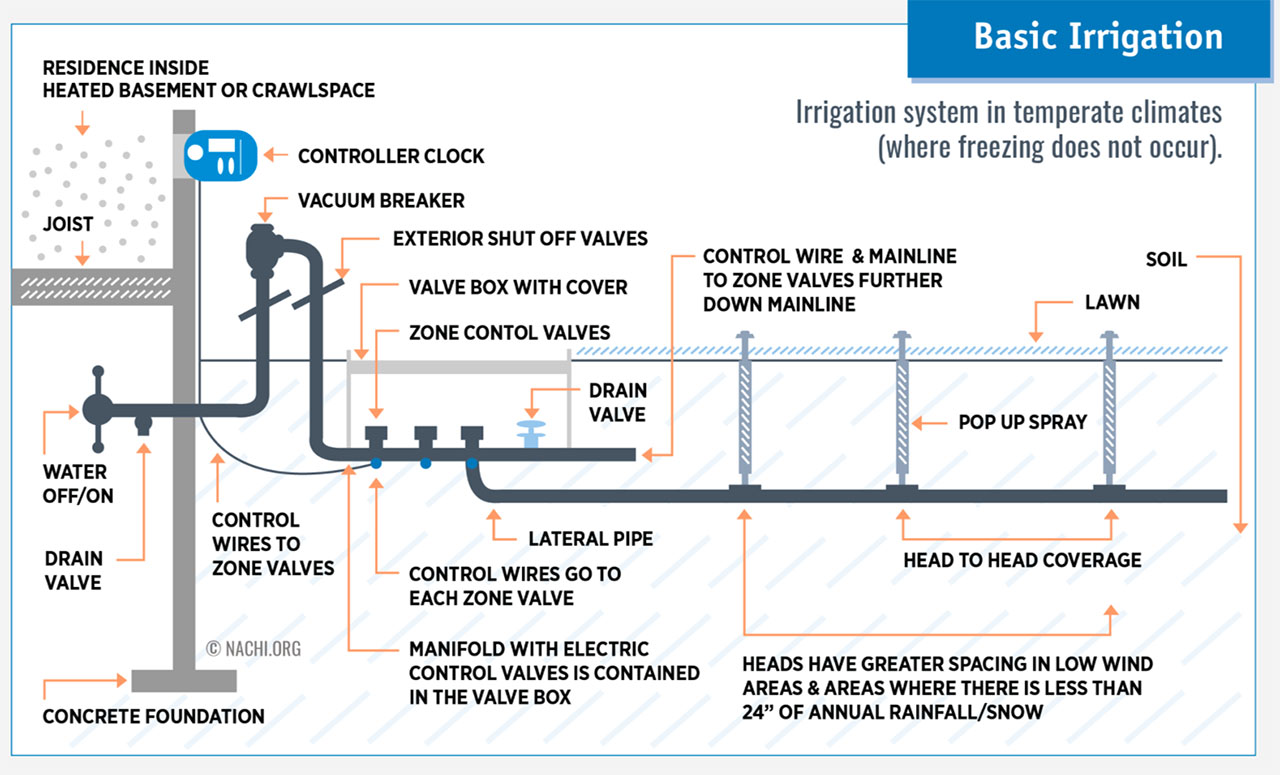
- Mainlines and Submainlines: These are the primary conduits that transport water from the source to the drip lines.
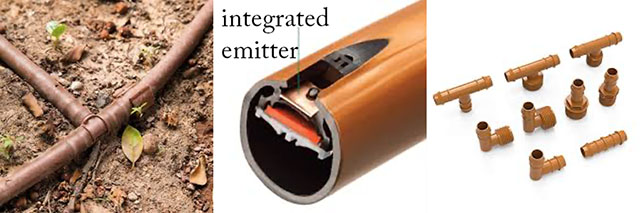
- Pressure compensated drip tubing with integrated emitters: Thin, flexible tubing embedded in the soil releases water directly to the root zones.
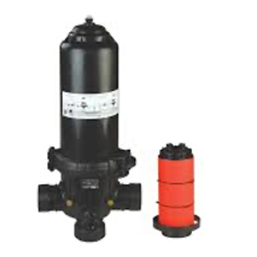
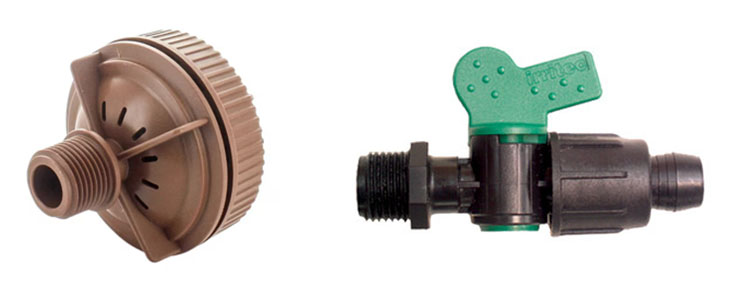
- Optional Filters: Prevent debris and particles from clogging the emitters, ensuring water flow remains unobstructed.
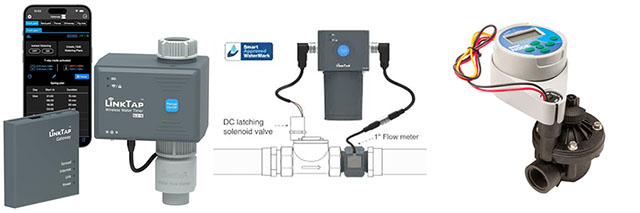
- Control Systems: Include timers, flow controllers, and monitoring devices to regulate irrigation schedules and volumes. (I use Hunter but LinkTap is also recommended)
Schematic for Mainlines and Submainlines
Tips and tricks I’ve learned along the way
- Install black source line on parameter of gardens
- Use twist connectors along parameter line
- Create a “manifold” from the parameter to reduce maintenance and repairs if SDI line becomes damaged.
- Use screw on adapter to connect SDI line to black manifold line
- Make “single run” SDI into garden.
- This allows lifting the SDI line out of the way when cleaning beds.
- Use Pressure-compensated (PC) dripper hose is a type of drip irrigation tubing with built-in emitters that deliver a constant flow rate of water, even if the water pressure varies. This is achieved through a labyrinth water passage that regulates the flow, ensuring uniform watering across the entire system, which is especially useful on uneven terrain or over long distances.
- If you live where the ground freezes, install a manual valve at lowest point in the installation. If using pulse scheduling; I do not recommend the diaphragm drain.
Pros and Cons of Subsurface
Pros
- Minimal evaporation
- Water at root zone
- Clean look
Cons
- Finding the drip
- Connectors are brittle over time
- SDI lines can expand and become exposed requiring re-trenching
Pulse irrigation
- A method of watering in short bursts of time applied frequently throughout the day
- This technique uses a programmable timer to deliver water in small amounts.
- This allows water to be absorbed better by the soil, which helps reduce runoff, improve water and nutrient distribution, and conserve water
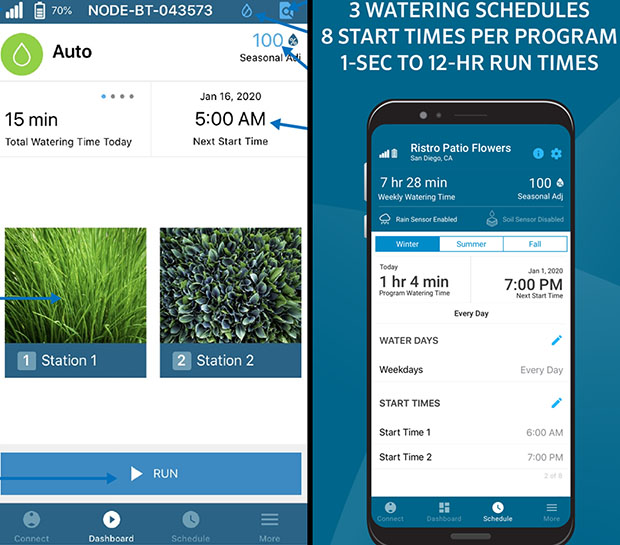
Winkie Dahlias Australia
- My experience of growing Dahlias for the last 30+ years has used a number of methods of irrigating/watering the plants.
- With the introduction of water restrictions alternatives were investigated & fine-tuned.
- Traditional water requirements for Dahlias advocated in a number of publications that a Dahlia Plant needs up to 2 gallons of water per plant per day.
- Water is applied up to six times a Day for two minutes at a time
- Each plant now receives a total of 0.6 gallon per week!
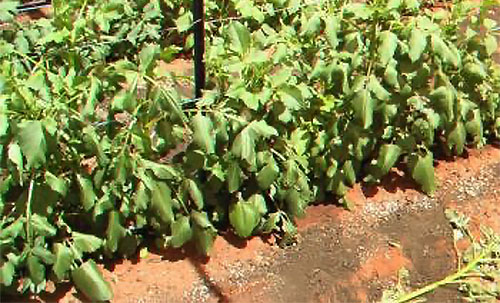
Stressed Dahlias in Mid Summer heat, Non-Pulsed irrigation.
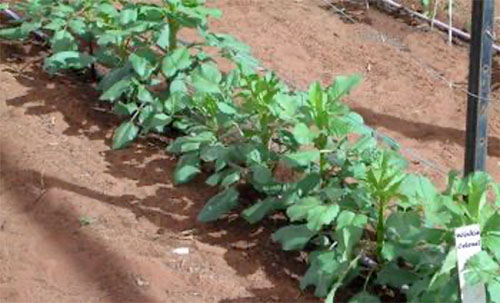
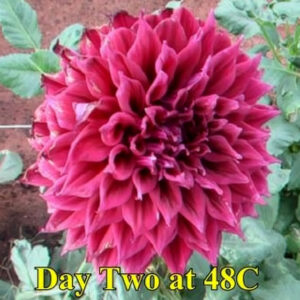
This picture was taken mid-afternoon on a 113F day. Pulsed Irrigation.
Why Pluse
Pulse Applications are extremely effective because it:-
- Applies water to the right place.
- Water soaks into the Root Zone.
- Provides Critical Available Water.
- No water lost to the lower soil profile.
- No Leaching of Fertilizers.
- Reduced bud burn & tip burn.
- 70% water Savings.