
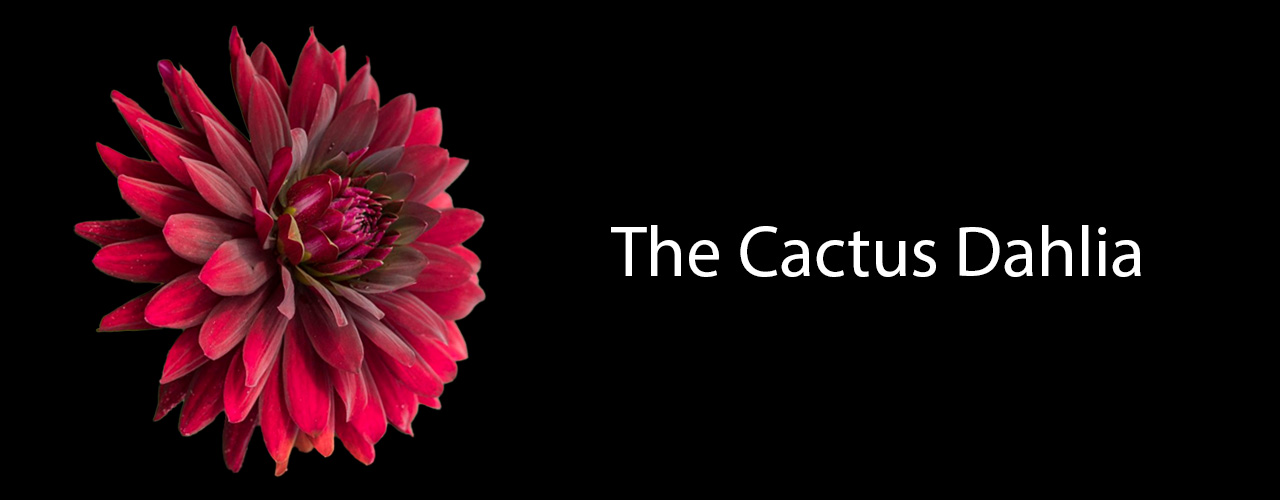
Dahlia Chat Noir - Semi Cactus Dahlia
THE CACTUS DAHLIA
J O A N N M I L L E R
HISTORY
In 1872 J.T. Van der Berg of Utrecht, Holland received a shipment of seeds and plants from a friend in Mexico. The entire shipment upon arrival was badly rotted and appeared to be ruined. In looking through the shipment he managed to find one small piece of root that seemed alive. After carefully planting and tending to it, he identified the plant as a dahlia. But this was an entirely different type of Dahlia than had previously been seen with a rich red color and a high degree of doubling. It was eventually named Dahlia Juarezii in memory of Benito Pablo Juarez, the President of Mexico, who had died earlier in the year 1872.
Van der Berg then took cuttings from these plants during the winter of 1872-1873. In 1874 he catalogued it and offered it for sale as, "New imported variety from Mexico, with very large rich crimson flowers; a splendid fiery orange scarlet, equal to the beautiful color of the red poppy. Its form very outstanding and different in every respect of all known dahlia flowers.
The cactus dahlia entered the scene roughly at the same time as the revival of the single dahlia in the floral world. As the precursor of large numbers of distinct and beautiful varieties, it played a large role in reviving the interest in Dahlias in both exhibition and usefulness in the garden. At first it did not find favor amongst florists who had become comfortable using dahlias within more formal lines. It did however quickly become popular with the General Public who was looking for something more akin to something light and natural rather than something more hybridized by different horticulturists.
It was eight years from the first planting in Holland until it was presented to the public by a Mr. W.H. Cullingford of Kensington who is credited with introducing the cactus dahlia in England. He first saw the dahlia in a nursery in Haarlem, Netherlands. He purchased and grew the plants out for two to three years without knowing the rarity of the plant. He eventually gave some plants to Mr. Cannell who recognized its potential, cultivated it, and brought it to the general public’s notice.
Henry Cannell, V.M.H. of Swanley, England first presented the cactus dahlia at a fruit show on September 3, 1880 at Alexandria Palace, Muswell Hill in London. It immediately caught the visitors attention and not long after that he presented at the Royal Horticulture Society in South Kensington where it once again created great interest.
Various attempts since then have been unsuccessful in searching for this plant in the wild. It is reported to be a semi-fertile natural hybrid of the variety of D. popenovii. In any event, this plant is considered to be the parent of all cactus-type dahlias.
So, while dahlias in general are native to the Americas, the specific "cactus" form with spiky petals is thought to have made its way from Mexico to Europe and then back to North America around the late 19th and early 20th centuries, experiencing a surge in popularity around the turn of the century.
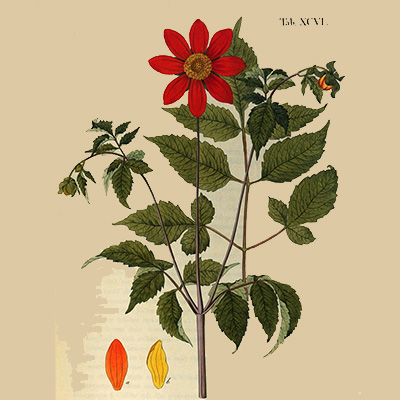
The parent plant of the Cactus dahlias is reported to be a semi-fertile natural hybrid of the variety of D. popenovii, image above. Various attempts of finding this parent plant in the wild have been unsuccessful.
CHARACTERISTICS
From a distance the cactus dahlia resembles the flowers of the Cereus speciossissimus but with a fine pipe-form and rolled up flower leaves.” Comparison to this Cereus, a genus of the cactus, resulted in the name “cactus” for this new dahlia, and the name remains with us today.
The word "cereus" means it is a cactus. The "Night Blooming Cereus" is a common name for several cacti in the genera Epiphyllum, Hylocereus, and Selenicereus. These cacti are known for their large, fragrant, white or pale-colored flowers that open at night and usually for only one night. They are often referred to as "Queen of the Night" or "Princess of the Night.
Night Blooming Cereus
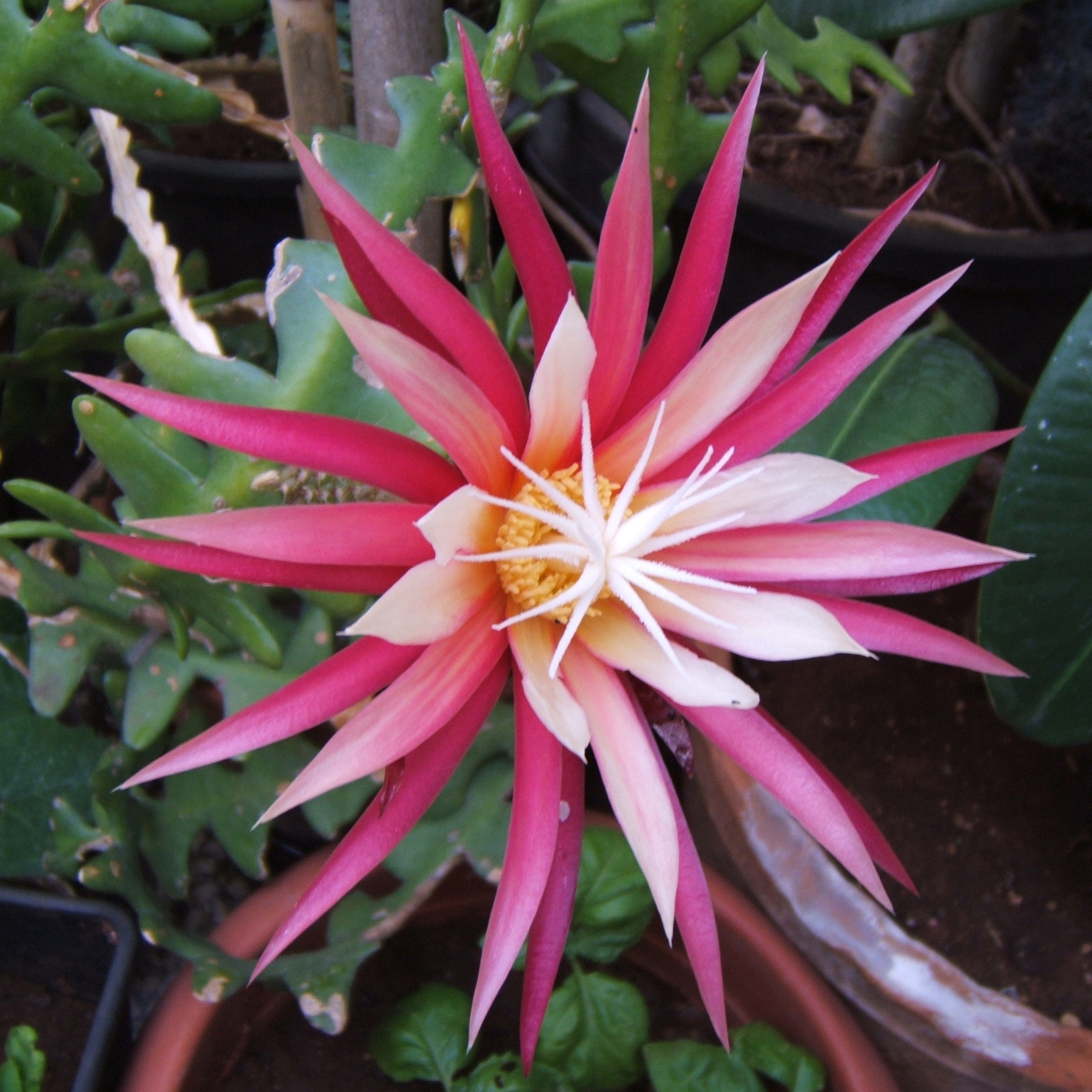
Selenicereus anthonyanus
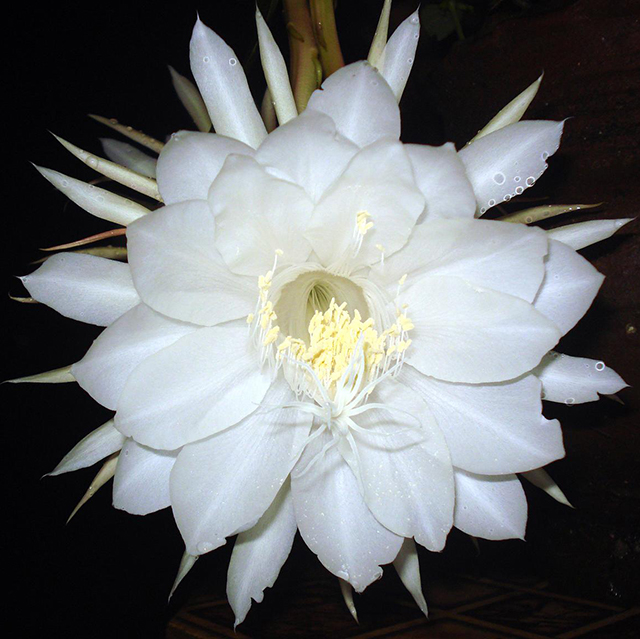
Epiphyllum oxypetalum, also know as the Queen of the night.
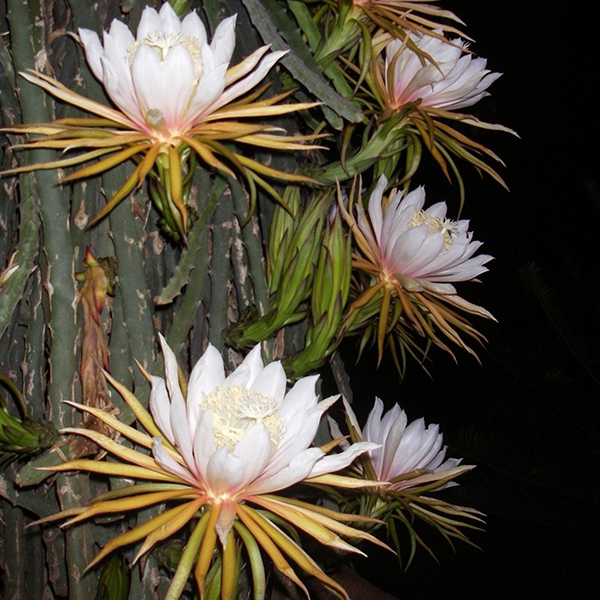
Hylocereus monacanthus.
The key difference between cactus and semi-cactus dahlias lies in the degree to which their petals are rolled.
Cactus dahlias have narrow, pointed petals that are rolled or curled in an inward or outward direction for most of their length, radiating from bright beaded centers giving them a spiky, "cactus-like" appearance.
Semi-cactus dahlias have petals that are rolled for only about half their length, with the base of the petal remaining flat. This results in a less spiky, more open, and sometimes even fluffy appearance compared to their cactus counterparts.
Cactus Dahlias have large blooms that can grow up to 10 inches across and can reach a height of 4 feet or more, with colors ranging from lipstick red to a breath of peach, lemon meringue yellow and white, claret, and more.
The unusual shape of the cactus dahlia allows rain to easily drain out of the petals, which prevents the flower from becoming top-heavy and enables it to remain upright – something that many other varieties of dahlia struggle with. They are also more resilient in high winds.
.
Their unique forms make them excellent for creating striking landscape features and impressive cut flower arrangements. The are fairly easy to grow from seed, and as with all Dahlias, the tubers should be planted in late spring when the danger of frost has passed in fertile, well-draining soil.
Cactus Dahlias
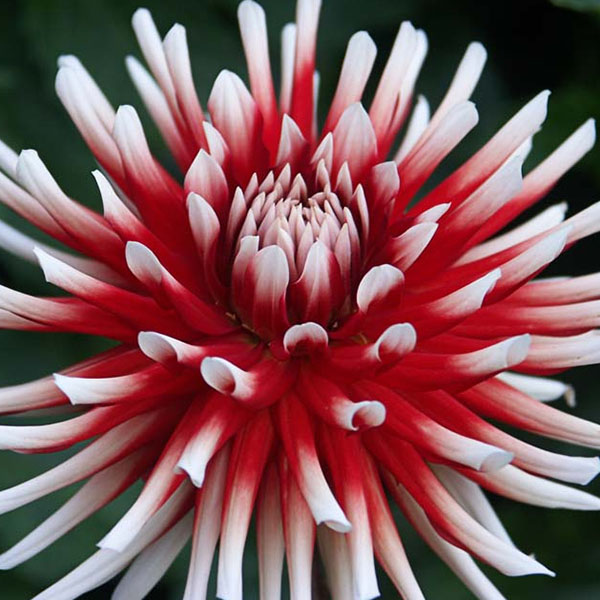
Dahlia Jaldec Joker - Cactus
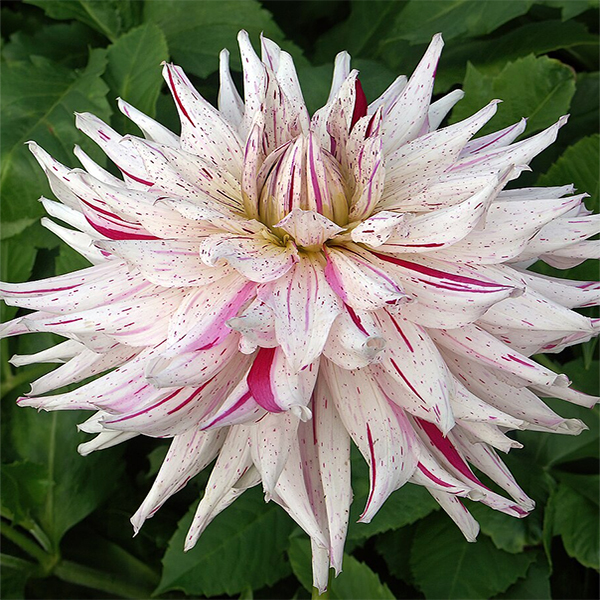
Dahlia Mick's Peppermint - Semi-cactus
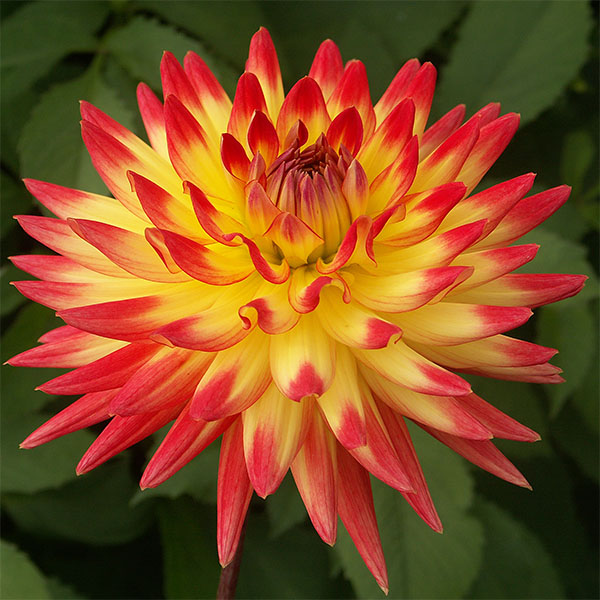
Dahlia Bridge View Aloha - Semi-cactus
GARDEN OR COMPETITIVE CHOICES
When Cactus Dahlias are being chosen for the garden, the characteristics of the plants should have first consideration. It is important to choose plants most suitable for their color effects in the garden. Varieties that are compact in growth and carry their blooms above the leaves make great selections. When consideration to the height of the plant and the color of the flowers are factored in, cactus flowers can create a beautiful border in the garden. They are also a great choice for borders where other flowers are blooming until they make their appearance in mid-summer.
It has been suggested by George Gordon, Author of Dahlias, that varieties grown for exhibition should be chosen from the winning stands at exhibitions and grown in a section specifically set aside for show dahlias in order to give them the special care and attention needed to achieve the best flowers for competition.
So, whether you are growing cactus dahlias for the garden or for competition, you won’t be disappointed in the beauty and different characteristics they have to offer,